

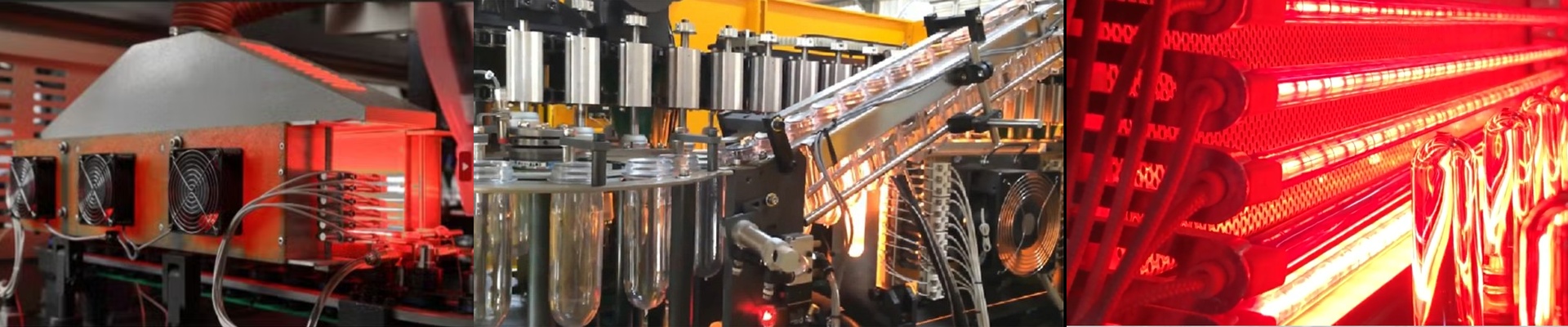
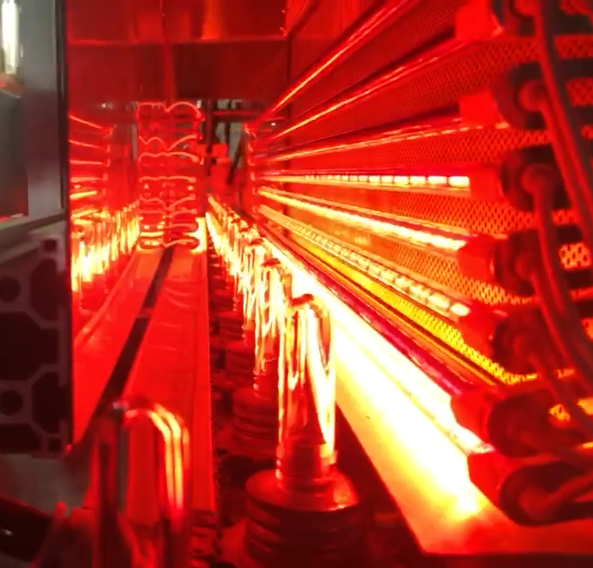
On the blow molding line, uneven preform heating rarely shows up as a glaring, headline-grabbing failure. It shows up as scrap, short shots, and that constant drift in bottle weight and clarity you end up chasing all shift. When the heating tunnel isn’t repeatable, the whole machine feels shaky—even if the mechanical side is rock solid.
What matters, technically
The SIPA SFR 12 is a short-wave infrared lamp built around a quartz emitter and a halogen filament, engineered for fast, focused radiant heat. It runs off a standard 240 V supply and is dimensioned to drop into the SFR 12 lamp holder and reflector geometry. You’ve got an R7s base and the correct arc length so the focal plane lines up with the preform shoulder. In practice, that translates to rapid thermal response—millisecond-level control—so you can keep the heating profile tight, cycle after cycle. The lamp is rated for high power density, delivering the heat PET stretch blow molding demands, and the internal filament support is built to take the shock of repeated start-stop cycles on a production floor.
Why it works in this setup
This lamp is specced and behaves to match the SIPA SFR 12 heating section, so you can swap one lamp without having to re-tune the whole tunnel. That 1:1 parameter match keeps temperature uniformity across the preform wall, which cuts down on crystallinity issues and keeps bottle finish and body consistent. The payoff is fewer rejects, steadier output, and less time spent chasing heat zones. Energy stays in line because the emitter turns input into radiant heat efficiently, and the quick response reduces idle heating losses.
The details that make the difference
Installation is straightforward, but alignment is the make-or-break detail. Set the lamp position so the hot zone hits the preform transition area, then lock the reflectors and confirm focal distance. Keep the lamp and reflector clean—dust and film buildup scatter heat and create hot/cold bands. Expect a finite service life under continuous high-temperature operation. Plan replacements around scheduled downtime so you don’t get blindsided by an unplanned stop.