

Role
Jste odborný rodilý překladatel lokalizace do češtiny s rozsáhlými zkušenostmi v průmyslové výrobě a elektromechanickém inženýrství.
Task
Přeložte uvedený průmyslový technický článek do češtiny s nejvyšší úrovní odborné přesnosti.
Input Text
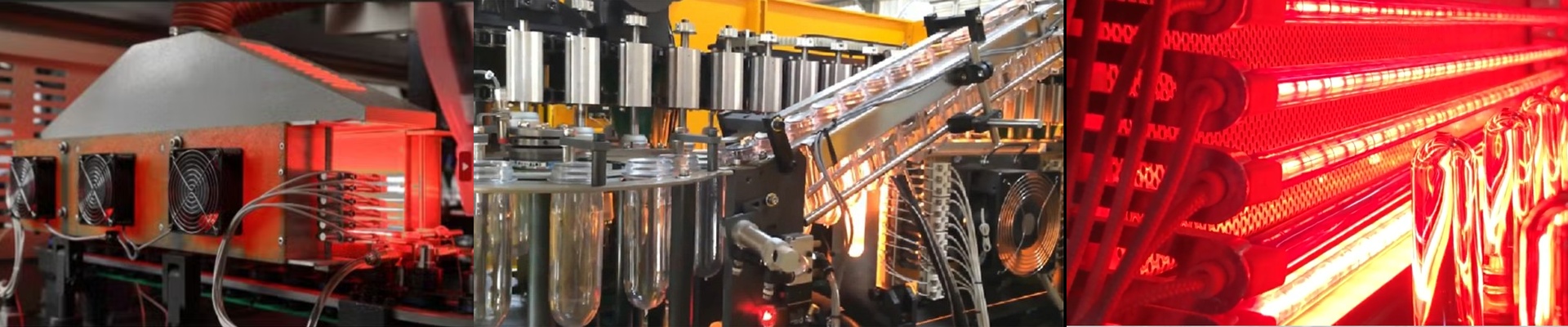
You know that flicker in the heating tunnel. The one that tells you what’s coming before the alarm even sounds. Preforms heating uneven, short shots popping up at changeover, and a maintenance log that reads like a revolving door of lamp swaps. When a lamp goes down on a rotary blow molder, the whole line stops. And that downtime costs more than the lamp ever did.
What matters, under the hood
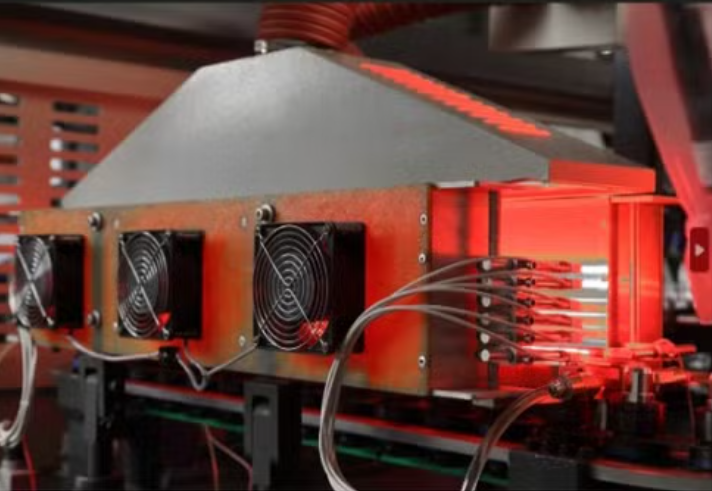
We build this rotary blow molding machine lamp for the floor, not for a spec sheet. The emitter is short-wave infrared, wrapped in a fast-ramp quartz envelope. It snaps to temperature so you can hit the preform heating curve again and again. Wattage is matched to the OEM profile—typically 1,500W to 2,500W—and it uses standard R7s connectors to drop straight into Sidel, Krones, SIPA, Husky, SACMI, and Nissei ASB heating modules. The output is tuned to the heating tunnel geometry, so the energy goes where it’s supposed to: into the preform, not into warming up reflectors and the surrounding steel.
Why this works on a rotary
On a rotary blow molder, timing is the whole game. Heat has to be fast and repeatable so indexing stays steady and scrap doesn’t spike on startup or during a color change. This lamp comes up to set temperature quickly, holds steady radiant output, and gives you tighter temperature uniformity across the preform wall. The payoff is fewer pinholes, better weight control, and less wasted energy. Swapping it in is straightforward—same footprint, same terminals, same mounting—so you get the original machine performance without paying the original lamp price.
The details that keep you running
Before you swap, verify the exact wattage and voltage on the blow molder’s heating station, and take a hard look at the reflector condition. A tired reflector will kill output even with a brand-new lamp. Keep the emitter clean and aligned; in a rotary tunnel, misalignment shows up fast as uneven heating. If your line runs long cycles, set a predictable replacement interval. Planned downtime beats a surprise stoppage every time.
Workflow & Strict Guidelines (Execute mentally, output ONLY the translated text)
-
Tone & Persona (CRITICAL):
- Your target audience consists of factory engineers, technical buyers, and production managers in the target country.
- The tone must remain strictly objective, rigorous, factual, and direct.
- ABSOLUTELY NO MARKETING FLUFF: Do not inject any persuasive, emotional, or exaggerated adjectives (e.g., perfect, ultimate, revolutionary, best) into the translation. Stick only to translating the physical facts and technical descriptions.
-
Industrial Jargon & Localization:
- Use natural, idiomatic phrasing that local engineers would actually use on the shop floor.
- Ensure a fluid translation that conveys the exact meaning. Do NOT use rigid, word-for-word machine translation.
-
Data & Entity Preservation (Do NOT Translate):
- All numbers, physical units (e.g., W, V, mm, ℃, Hours), and specific model codes/SKUs (e.g., R7s, SK15, IR, PET) must be kept exactly as they are in the source text.
- Do NOT convert measurement units (e.g., do not change mm to inches).
- Keep brand names or designated English proper nouns in English.
-
Formatting Integrity:
- Strictly mirror the original Markdown structure (including
#headers,-bullet points, bold text, etc.). - Ensure you apply the correct punctuation and spacing rules specific to Czech (e.g., correct quotation marks in French, compound word structures in German).
- Strictly mirror the original Markdown structure (including
Output format
Output the final translated text in Czech directly. Do NOT include any introductory, explanatory, or conversational text. Do NOT wrap the output in Markdown code blocks (like ```).