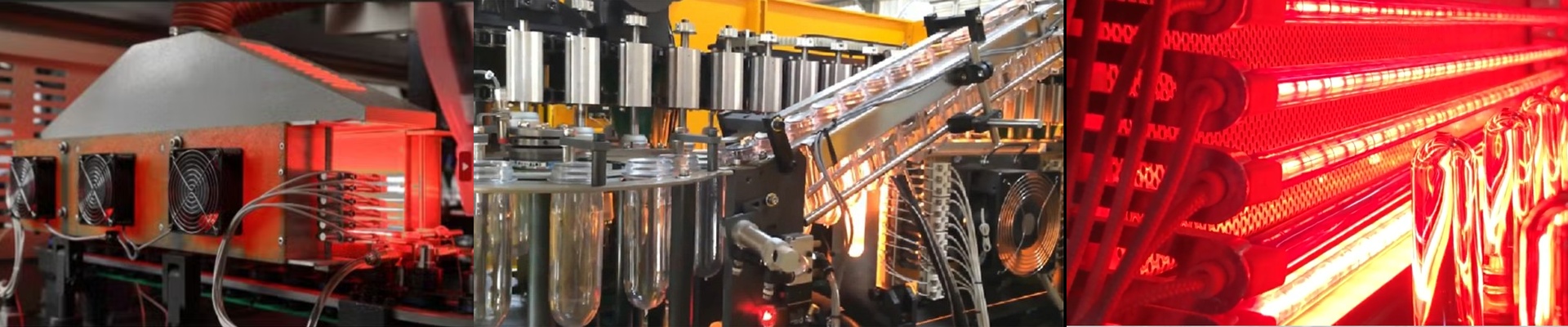

Out on the plant floor, a preform heating profile that’s slow or uneven doesn’t just throttle line speed — it bleeds scrap. When the heating tunnel misses the mark, you’re staring down inconsistent wall thickness, blown bottles, and unplanned stops. We built our infrared lamps to replace that guesswork with repeatable heat, matched to your blow molder’s geometry and cycle. What matters, technically We run a short-wave infrared emitter, usually a quartz halogen design, because it dumps fast, focused energy straight into the PET preform wall. The numbers don’t lie: 2400 W to 4800 W per lamp, 240 V operation, and standard R7s connectors so they drop right in. Emitters run with a surface temperature of 900–1000°C, hitting a peak wavelength around 1.0–1.2 μm that PET absorbs efficiently. The payoff is quick, controlled heating with tight temperature bands across the neck and body. Why it plays on your floor Whether you’re on Sidel, Krones, SIPA, Husky, SACMI, or Nissei ASB, the lamp is sized and positioned to match the OEM heating tunnel layout. That 1:1 parameter match keeps preform surface temperature in the 100–130°C window without hot spots, which cuts rejects and steadies stretch ratios. Faster ramp-up shortens cycle time, and stable output drops energy use per thousand bottles. We’ve got units running 5,000+ hours with less than 5% output drop, so you spend less time swapping parts and more time making bottles. The things you’ll want to get right Installation is straightforward, but alignment is where the job is won or lost. Even a small mis-focus shifts the heat map and can leave you with thin spots or crystallization. These lamps run hot, so make sure airflow is adequate and keep reflectors clean if you want consistent performance. If your line runs frequent color changes, check the lamp’s thermal response and dwell settings to avoid residual heat that can discolor the next batch.